




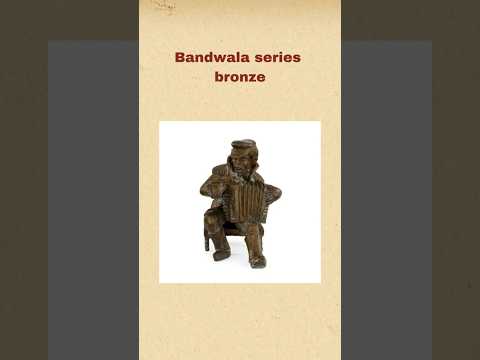
Krishen Khanna (b. 1925) is one of India's most celebrated living modernists and the last surviving member of the Progressive Artists' Group (PAG). Born in Lyallpur (now Faisalabad, Pakistan) and educated at Imperial Service College in England, he returned to India during Partition. A self-taught painter who worked as a banker for Grindlays Bank until 1961, he was inducted into the PAG by M.F. Husain and exhibited with the group from 1949.
Artistic EvolutionKhanna's oeuvre reflects his fascination with the human condition:Early Period (1940s-50s): Figurative works capturing Partition trauma and urban migrantsMature Period (1960s-70s): Iconic Bandwallah and Truckwallah series—vibrant, expressionistic portraits of street musicians and laborersReligious Series (1980s onwards): Reinterpretations of The Last Supper, La Pietà, and Mahabharata scenesHis bold impasto technique and Fauvist palette create paintings that pulse with life and movement.Themes and PhilosophyKhanna's work chronicles India's social transformation—from the struggles of the working class to spiritual meditations.
He famously said, "I paint not what I see, but what I feel," blending everyday observations with profound empathy for the marginalized.Key Highlights for Competitive ExamsProgressive Artists' Group: Associate member (1949); first painting bought by Dr. Homi BhabhaAwards: Padma Shri (1990), Padma Bhushan (2011), Rockefeller Fellowship (1962)International Recognition: Venice Biennale (1966), São Paulo Biennale (1961)Signature Series: Bandwallah, Truckwallah, News of Gandhiji's Death (1949)ConclusionKrishen Khanna's journey from banker to modernist icon makes him essential for understanding the PAG's social realism and India's post-Independence art narrative.
Artistic EvolutionKhanna's oeuvre reflects his fascination with the human condition:Early Period (1940s-50s): Figurative works capturing Partition trauma and urban migrantsMature Period (1960s-70s): Iconic Bandwallah and Truckwallah series—vibrant, expressionistic portraits of street musicians and laborersReligious Series (1980s onwards): Reinterpretations of The Last Supper, La Pietà, and Mahabharata scenesHis bold impasto technique and Fauvist palette create paintings that pulse with life and movement.Themes and PhilosophyKhanna's work chronicles India's social transformation—from the struggles of the working class to spiritual meditations.
He famously said, "I paint not what I see, but what I feel," blending everyday observations with profound empathy for the marginalized.Key Highlights for Competitive ExamsProgressive Artists' Group: Associate member (1949); first painting bought by Dr. Homi BhabhaAwards: Padma Shri (1990), Padma Bhushan (2011), Rockefeller Fellowship (1962)International Recognition: Venice Biennale (1966), São Paulo Biennale (1961)Signature Series: Bandwallah, Truckwallah, News of Gandhiji's Death (1949)ConclusionKrishen Khanna's journey from banker to modernist icon makes him essential for understanding the PAG's social realism and India's post-Independence art narrative.
- Catégories
- Peintures
- Mots-clés
- Ugc net, jrf, htet, dsssb, nvs, kvs, ctet, fine arts, visual arts, coaching, tranding, viral, current affairs, learn, study motivation, art, artists, art movments, art study, fine art coaching, drawing, painting, art coaching, prism academy, htet coaching
Ajouter un commentaire
Up Next
Autoplay
-
00:24

La motivation, musique, cours yoga, méditation, self attitude motivation #motivation #citation
-
00:38
Seymour explains Taylor Momsen bit by a bat on stage #currentaffairs #music
-
00:14
La motivation, musique, cours yoga, méditation, self attitude motivation #motivation #citation
-
00:24
Artist Chintamani Kar #visualart #net #netjrf #ugcnet #netjrf #visual #artist #sculpture #youtube
-
01:01
MOUNT RUSHMORE (माउंट रशमोर) की संपूर्ण जानकारी #mount_rushmore #tgt_art2024 #ugcnet #dsssb #shorts
-
05:01

Bryan.G - Les Couleurs De L'amour
-
06:07
Cours De Guitare - Gipsy Kings : Bamboleo (2/8) Rythmique
-
04:45
Démonstration De Fleurs Réalisées à La Peinture à L'huile Et Au Couteau, Par Catherine VICTOIRE
-
01:14

Générique TARATATA (Musique Composée Par Jean-Jacques Goldman)
-
04:12
Run Away With Me by Section C
 Chargement...
Commentaires